Search


Current location:Home > News > Industry News
An Industrial Laser Selection Guide Based on Practical Manufacturing Requirements
By SUNIC LASER Technical Team
Choosing an industrial CO₂ laser machine involves more than comparing laser power and purchase prices. For manufacturers processing textiles, heat transfer films, leather, paper, and packaging materials, laser source technology can influence processing consistency, maintenance requirements, production efficiency, and long-term operating costs.
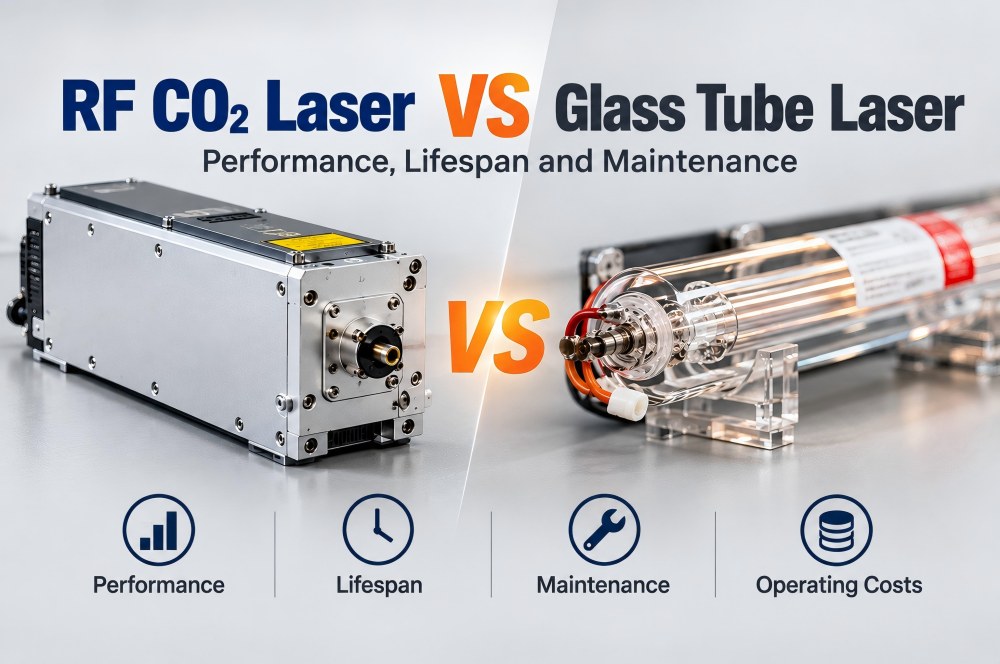
Two commonly used technologies are RF-excited CO₂ lasers and DC-excited glass tube CO₂ lasers.
While both can process various non-metallic materials, their characteristics and suitability for industrial production can differ significantly.
For manufacturers operating high-volume production lines, the key question is not simply which laser costs less, but which system delivers the required quality and production capacity at an acceptable total cost.
This guide examines the differences between RF CO₂ and glass tube lasers, explains how laser source selection affects industrial applications, and shares practical considerations from SUNIC LASER's textile and material processing experience.
Both technologies use CO₂ laser gas mixtures to generate infrared laser radiation, but their excitation methods and source designs differ.
RF (Radio Frequency) CO₂ lasers use high-frequency electrical energy to excite the laser gas inside a laser cavity.
Many industrial RF CO₂ laser sources employ sealed metal-based waveguide or slab-discharge designs, depending on the manufacturer and model.
Their characteristics may include:
Fast and precise laser power modulation
Consistent beam characteristics under specified conditions
Good suitability for repeated fine-detail processing
Long service intervals in appropriately designed industrial sources
Compatibility with high-speed galvanometer scanning systems
These features are valuable for applications involving dense perforation patterns, fine engraving, and repeated precision processing.
Conventional glass tube CO₂ lasers typically use high-voltage direct current to excite the laser gas inside a sealed glass tube.
They are widely used in economical laser cutting and engraving machines.
Typical characteristics include:
Lower initial purchase cost
Broad availability of replacement tubes
Suitability for general cutting and engraving
Water-cooling requirements in most configurations
Periodic laser tube replacement as performance declines
Glass tube technology remains a practical choice for many manufacturers, particularly where production volumes are moderate and investment budgets are limited.
| Comparison Factor | RF CO₂ Laser | DC Glass Tube CO₂ Laser |
|---|---|---|
| Excitation method | Radio frequency | High-voltage direct current |
| Initial investment | Generally higher | Generally lower |
| Power modulation | Typically fast and precise | Depends on tube and power supply |
| Beam characteristics | Designed for specified industrial performance | Varies by tube quality and design |
| Fine-detail processing | Well suited to demanding applications | Suitable for many standard applications |
| Service life | Often longer for industrial models | Typically requires more frequent replacement |
| Cooling | Air or water, depending on model | Usually water |
| Maintenance | Routine maintenance and source-specific servicing | Routine maintenance and tube replacement |
| Typical applications | Precision marking, perforation, converting | General cutting and engraving |
Actual results depend on laser source specifications, optical design, scanning system, material characteristics, and operating conditions.
An important distinction is that laser source performance and complete machine performance are not the same thing.
For example, the maximum scanning speed of a galvanometer system does not represent the actual cutting or perforation speed achievable on every material.
The final processing result depends on the interaction between laser power, beam quality, scanning speed, pulse control, and material properties.
In high-volume manufacturing, consistent laser energy is essential for maintaining repeatable processing results.
Consider a sportswear manufacturer producing thousands of perforated fabric panels.
The required processing quality may involve:
Consistent hole diameter
Accurate hole positioning
Uniform processing across repeated patterns
Controlled heat-affected areas
Minimal material distortion
Stable production over extended operating periods
If laser output changes significantly during production, hole appearance and processing consistency may also change.
Industrial RF CO₂ laser sources are frequently selected for applications requiring precise power control and repeatability.
However, output stability alone does not guarantee consistent finished products.
Optical alignment, cooling performance, material variation, machine calibration, and extraction conditions must also be considered.
For manufacturers evaluating laser equipment, a practical recommendation is to test not only the initial sample quality but also processing consistency during repeated production cycles.
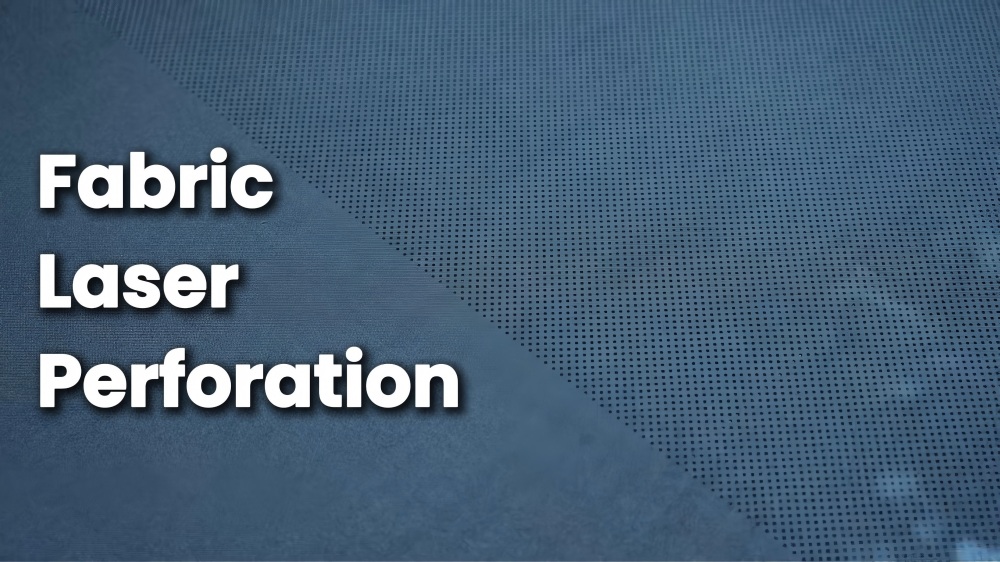
At SUNIC LASER, textile perforation is one of the important applications of our CO₂ galvanometer laser systems.
Our equipment is used to evaluate laser processing solutions for sportswear fabrics, synthetic textiles, leather, and other non-metallic materials.
For perforated sportswear, manufacturers may require different hole diameters, spacing patterns, and processing areas depending on fabric construction and garment design.
In a previous SUNIC LASER composite fabric processing evaluation, the following configuration and pattern were tested:
| Test Parameter | Specification |
|---|---|
| Material | Composite fabric |
| Processing area | 1,700 × 1,000 mm |
| Hole diameter | 0.9 mm |
| Pattern spacing | 1.8 mm × 3.6 mm |
| Laser technology | RF CO₂ galvanometer system |
| Single-head configuration | 250 W |
| Three-head configuration | 3 × 250 W |
Recorded processing results:
Single-head system with stitched processing: approximately 34 minutes
Three-head system with stitched processing: approximately 11.5 minutes
Under these test conditions, the three-head configuration reduced the processing time by approximately 66%, achieving nearly three times the processing throughput of the single-head configuration.
These results demonstrate how machine configuration and multi-head processing can influence production efficiency.
Important: This is a comparison between two RF CO₂ galvanometer machine configurations, not a direct comparison between RF and glass tube laser sources.
The test does not establish that RF laser technology is universally three times faster than glass tube technology.
Actual processing speed depends on fabric characteristics, pattern density, required edge quality, and machine configuration.
For buyers, the practical lesson is clear: equipment should be evaluated according to the required finished product and production capacity, rather than laser wattage alone.
Laser source lifespan can have a significant impact on long-term equipment ownership costs.
Some industrial RF CO₂ laser sources are designed for extended service intervals, with rated service lives reaching approximately 20,000 hours or more for certain models and operating conditions.
Selected SUNIC LASER machines incorporate imported industrial RF CO₂ laser sources, including Coherent technology.
Depending on the source model, these systems are selected to support demanding industrial processing requirements.
However, lifespan specifications should always be confirmed against the exact laser model and manufacturer documentation.
A useful distinction is:
Rated service life: The manufacturer's specified expected operating life under defined conditions.
Warranty period: The period covered by contractual warranty terms.
Actual useful life: The period during which the source continues to meet the required production performance.
These three values are not interchangeable.
Glass tube lasers also vary significantly in quality and lifespan. Their replacement intervals depend on factors such as operating current, cooling conditions, manufacturing quality, and usage patterns.
For buyers planning long-term production, the relevant question is how often the laser source may require servicing or replacement, and how that affects production continuity.
The initial equipment price represents only part of the investment.
Maintenance requirements and production interruptions can affect the total operating cost of a laser system.
Common maintenance activities include:
Cooling water inspection and replacement
Chiller and circulation system maintenance
Mirror and lens cleaning
Laser tube output monitoring
Optical alignment
Tube replacement when necessary
When replacing a glass tube, additional time may be required for installation, alignment, and performance verification.
Industrial RF CO₂ laser systems also require regular maintenance.
Typical tasks include:
Optical component cleaning
Cooling system inspection
Ventilation and filtration maintenance
Laser output monitoring
Electrical and control system inspection
RF laser sources are not maintenance-free, and specialist servicing may be required depending on the source design.
However, appropriately selected industrial RF sources can help reduce certain source-related maintenance interventions over their service life.
For manufacturers operating demanding production schedules, reduced unplanned downtime may be more valuable than a small difference in routine maintenance expenses.
When comparing industrial laser equipment, buyers should consider the total cost of ownership rather than the purchase price alone.
A simplified calculation is:
Total Cost of Ownership = Equipment Purchase Cost + Maintenance and Replacement Costs + Energy and Cooling Costs + Downtime Costs
For a more complete production analysis, manufacturers should also evaluate labor requirements, material waste, and the number of acceptable finished products.
Consider two production scenarios.
A workshop processes limited quantities of simple paper or acrylic products.
The machine operates only a few hours per day, and production deadlines are relatively flexible.
In this situation, a lower-cost glass tube laser machine may be an economical and practical solution.
A factory produces large quantities of perforated sportswear or garment accessories.
The equipment operates for extended periods, and the factory requires consistent processing quality, predictable output, and minimal production interruptions.
In this situation, an industrial RF CO₂ galvanometer system may offer better long-term value, despite a higher initial investment.
The economic advantage must be evaluated using actual production data.
Before purchasing industrial laser equipment, manufacturers should confirm:
How many finished products can the machine process per hour?
Can the required processing quality be maintained during extended operation?
What maintenance and source replacement costs should be expected?
How quickly can technical support and replacement parts be provided?
What is the estimated processing cost per acceptable finished product?
These questions often provide a more meaningful comparison than the initial quotation alone.
The answer depends on production requirements.
RF CO₂ galvanometer systems are particularly suitable for applications involving repeated hole patterns, precise laser energy control, and high-volume processing.
For synthetic fabrics such as polyester, nylon, and blended sportswear materials, sample testing is essential to evaluate hole quality, heat effects, processing speed, and possible odor or residue.
Fine patterns and repeated cutting contours require accurate control of laser energy and positioning.
RF CO₂ galvanometer systems can be configured for roll-to-roll processing or roll-to-sheet production, depending on the machine design.
Both RF and glass tube laser systems can process paper materials.
The selection depends on pattern complexity, processing area, production volume, and required cutting quality.
High-speed galvanometer systems may be advantageous for repeated fine-detail processing.
Laser scoring, perforation, and controlled-depth processing require careful evaluation of material structure and laser absorption.
Industrial RF CO₂ laser systems can be suitable for selected flexible packaging applications, including easy-open features and micro-perforation.
The optimal laser source and configuration depend on the packaging structure, line speed, and required barrier properties.
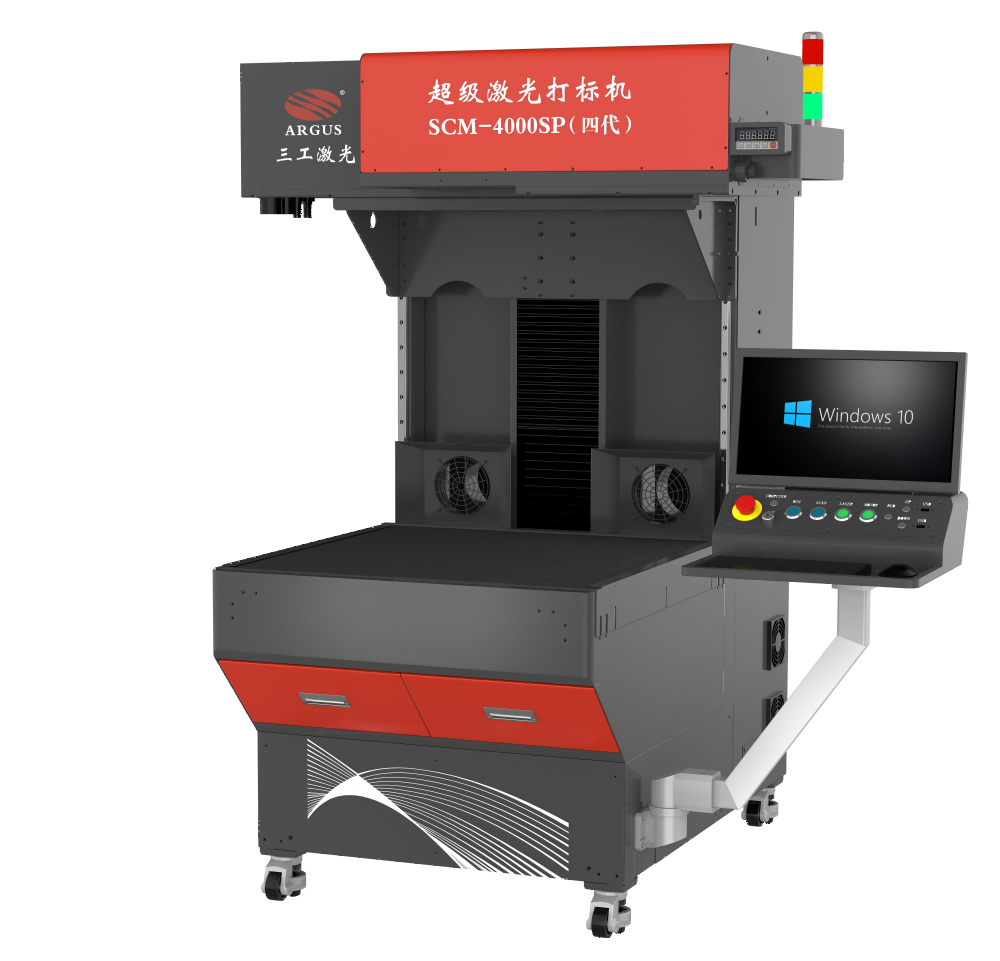
SUNIC LASER develops industrial laser processing solutions for manufacturers requiring precision, automation, and repeatable production quality.
Our selected CO₂ galvanometer systems incorporate imported RF CO₂ laser sources and optical components, together with application-specific machine configurations.
Depending on the application, our solutions can support:
High-speed textile perforation
Heat transfer film cutting and engraving
Leather perforation and decorative processing
Fine paper cutting and engraving
Flexible packaging laser scoring
Automated roll-to-roll processing
Our approach focuses on matching the machine configuration to the customer's material, production volume, and processing requirements.
Rather than recommending equipment based only on nominal laser power, we encourage customers to evaluate actual sample results, processing efficiency, and long-term operating requirements.
SUNIC LASER also provides application testing, technical consultation, operator training, and after-sales support.
For international customers, remote technical guidance is available, with on-site service arrangements subject to the agreed service terms.
RF CO₂ lasers can offer advantages in power modulation, industrial processing consistency, and source service intervals. However, glass tube lasers remain suitable for many economical cutting and engraving applications.
The better choice depends on the required production quality, capacity, and operating budget.
Some industrial RF CO₂ laser models have rated service lives of approximately 20,000 hours or more. Actual lifespan depends on the source model, operating conditions, cooling, and maintenance.
Always confirm the manufacturer's specifications for the exact laser model.
Not necessarily.
The laser source affects power delivery and modulation, but overall processing speed also depends on laser power, scanning or motion technology, material properties, and processing requirements.
An RF CO₂ galvanometer system may process certain fine patterns faster than a conventional moving-head system, but this should be verified through comparable tests.
No.
RF CO₂ laser systems require routine inspection and maintenance of optical, cooling, ventilation, and electrical components.
Source-specific servicing may also be required.
The price difference may reflect laser source technology, optical components, control systems, automation, machine construction, and technical support.
Buyers should evaluate these factors together with productivity, maintenance, and long-term operating costs.
The most reliable approach is to test the same material, processing pattern, and quality requirements on the candidate machines.
Processing time, finished-product quality, operating stability, and maintenance requirements should all be considered.
RF CO₂ lasers and glass tube CO₂ lasers serve different production needs.
Glass tube systems can provide an economical solution for general cutting and engraving, while industrial RF CO₂ laser systems may offer advantages in demanding precision applications and long-term production environments.
For manufacturers investing in industrial laser equipment, the most important considerations are processing quality, production efficiency, equipment reliability, maintenance requirements, and total cost of ownership.
A successful equipment investment is not defined by the lowest initial price, but by its ability to deliver consistent production results at a sustainable operating cost.
Every material and processing requirement is different.
SUNIC LASER helps manufacturers evaluate suitable industrial CO₂ laser configurations through technical consultation and sample testing.
Share your material specifications, processing pattern, and expected production capacity with our team to discuss a suitable solution.
SUNIC LASER
Industrial Laser Processing Solutions
Website: https://suniclasertech.com
