Search


Current location:Home > News > Industry News

Laser cutting can create intricate patterns, decorative openings and custom shapes in paper and cardstock. For manufacturers of greeting cards, invitations, packaging and paper crafts, it offers a flexible way to turn digital designs into physical products without producing a cutting die for each new pattern.
However, an attractive sample is only the beginning. Material selection, design strength, edge appearance and production workflow all affect whether a design is suitable for repeatable manufacturing. This guide explains common paper laser cutting applications and the factors to consider before choosing a machine.
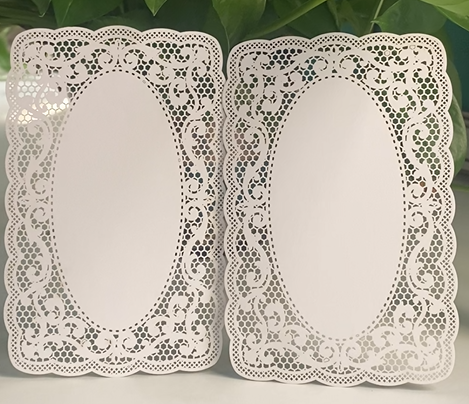
Laser cutting is useful for decorative details such as lace borders, floral patterns, butterflies, lettering and geometric openings. These features can add depth and texture to greeting cards, wedding invitations and event stationery.
For manufacturers handling personalized designs or frequently changing collections, processing from digital files can simplify design revisions. A new pattern can be tested without first making a dedicated cutting die.
Fine details still require careful evaluation. Narrow connections must be strong enough to withstand waste removal, handling and folding. When cutting printed invitations, the relationship between the printed artwork and the cutting path must also be checked.
Paper laser cutting can be used for decorative windows, patterned sleeves, presentation inserts and ornamental panels for packaging.
These applications are particularly relevant when the cut pattern forms part of the product’s visual identity. A decorative opening can reveal the product inside, while a patterned outer sleeve can create a layered appearance.
The complete packaging workflow should be considered during planning. Cutting, creasing, folding and gluing are separate operations. A machine selected for decorative cutting should be evaluated alongside the other processes required to produce the finished box.
Laser cutting can produce detailed silhouettes, layered components and repeating patterns for paper art, decorations and craft products.
For these applications, design quality depends on more than the visible outline. Thin sections need sufficient support, and the finished components must be practical to remove, sort and assemble.
Layered products also require attention to alignment and assembly. A cleanly cut component contributes to the final result, but the completed artwork may still require manual positioning, bonding or other finishing work.
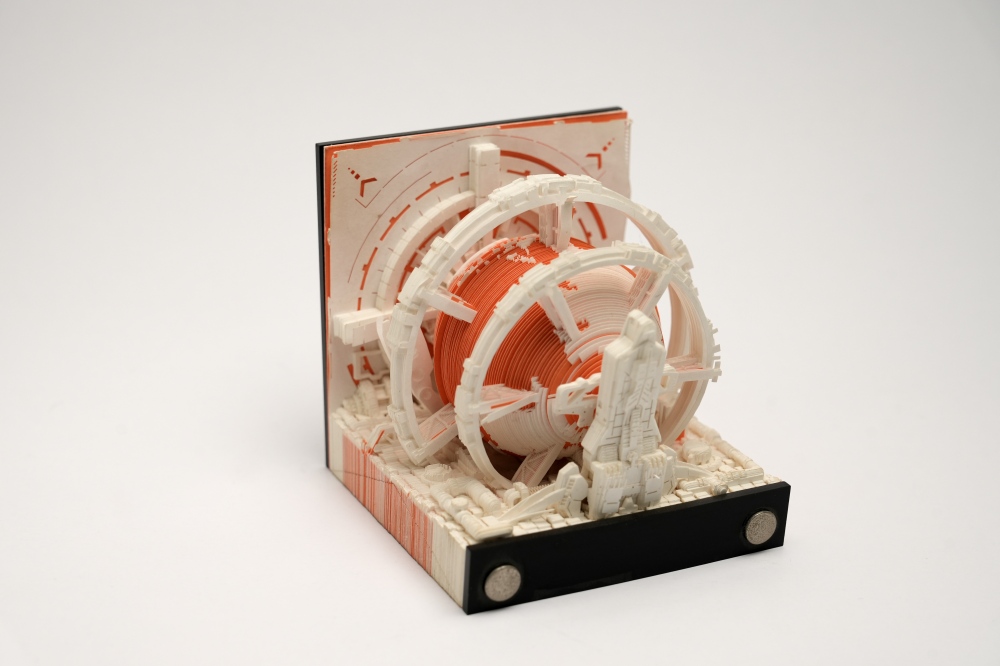
Some sculptural paper products create a three-dimensional form through a sequence of sheets with different contours. These projects require evaluation of both the cutting process and the management of individual layers.
Before selecting equipment, manufacturers should confirm how each layer will be processed, identified, arranged and bound. Total production time must include sheet handling and finishing.
Cutting individual sheets is a different process from cutting through a complete paper block. The intended construction method should therefore be discussed and tested before equipment suitability is confirmed.
Paper products vary in thickness, density, fiber structure, color and surface finish. Two papers with the same grammage may behave differently during processing.
Coatings, laminates, adhesives and decorative finishes can also influence the result. Material composition should be identified before testing, particularly when processing coated or laminated products.
Use the actual production stock for evaluation whenever possible. A successful test on a different paper does not confirm the appearance or processing conditions for the final material.
A detailed pattern may look attractive on screen but become fragile after cutting. Small bridges, sharp corners and closely spaced openings should be checked on a physical sample.
Dense designs may also require more processing time because of their longer total cutting path. The overall dimensions of a card alone cannot indicate how quickly it can be produced.
A useful sample test should answer three questions:
Are the details reproduced clearly?
Can the waste be removed without damaging the design?
Does the product remain intact during normal handling and finishing?
Laser processing uses heat, so edge color and visible marks need to be assessed against the finished product’s requirements.
For a colored decorative card, a slight change at the cut edge may be acceptable. For white invitation stock or premium packaging, the acceptance criteria may be stricter.
Avoid assuming that every paper can achieve the same edge appearance. Material selection, processing parameters, extraction and the supporting surface should be evaluated together.
Paper must remain sufficiently stable during processing to maintain consistent results. Curling, movement and uneven positioning can affect cutting quality and alignment.
Consider how sheets will be loaded, held, removed and transferred to the next operation. For delicate patterns, handling the finished sheet may take significant time even when the cutting process itself is fast.
The choice depends on the product, order quantity and production requirements.
Laser cutting is worth evaluating when designs change frequently, decorative details are complex, or the manufacturer needs to test multiple versions before production.
Conventional die cutting should also be considered for recurring orders with a fixed design, especially when established tooling and production equipment already meet the required quality and output.
Compare the complete workflow rather than a single machine specification. Relevant factors include:
Tooling and design revision costs.
Processing time for the actual artwork.
Loading, unloading and waste removal.
Required edge appearance.
Creasing, folding, assembly and other finishing operations.
The most useful comparison is a production trial using the intended material and design.
Confirm the size of the material and the area that needs to be processed. Allow for positioning and handling requirements as well as the finished design dimensions.
A machine that accommodates one invitation may not be suitable for a large packaging sheet or several products arranged on the same sheet.
For paper products supplied in individual sheets, material handling is an important part of machine selection.
A standard machine can be considered when operators need flexibility to handle different paper sizes, designs and processing tasks. Evaluate how sheets will be positioned, loaded and removed during normal production.
An automatic sheet loading and unloading system can help reduce repetitive handling and support a more continuous workflow. Its suitability depends on the paper’s size, stiffness, surface condition and flatness, as well as the structure of the cut design.
Test both material feeding and finished-sheet removal. Delicate cutouts and loose waste may affect handling even when the cutting result meets the required standard.
If the cutting path must follow a printed image, confirm the required registration method and accuracy during testing.
A suitable vision positioning option may help align cutting with printed features, but its suitability should be verified using representative artwork and production materials.
Scanner speed is not the same as finished-product output.
Ask for the processing time of a representative design and clarify what the measurement includes. For a realistic production estimate, account for positioning, cutting, unloading, waste removal and finishing.
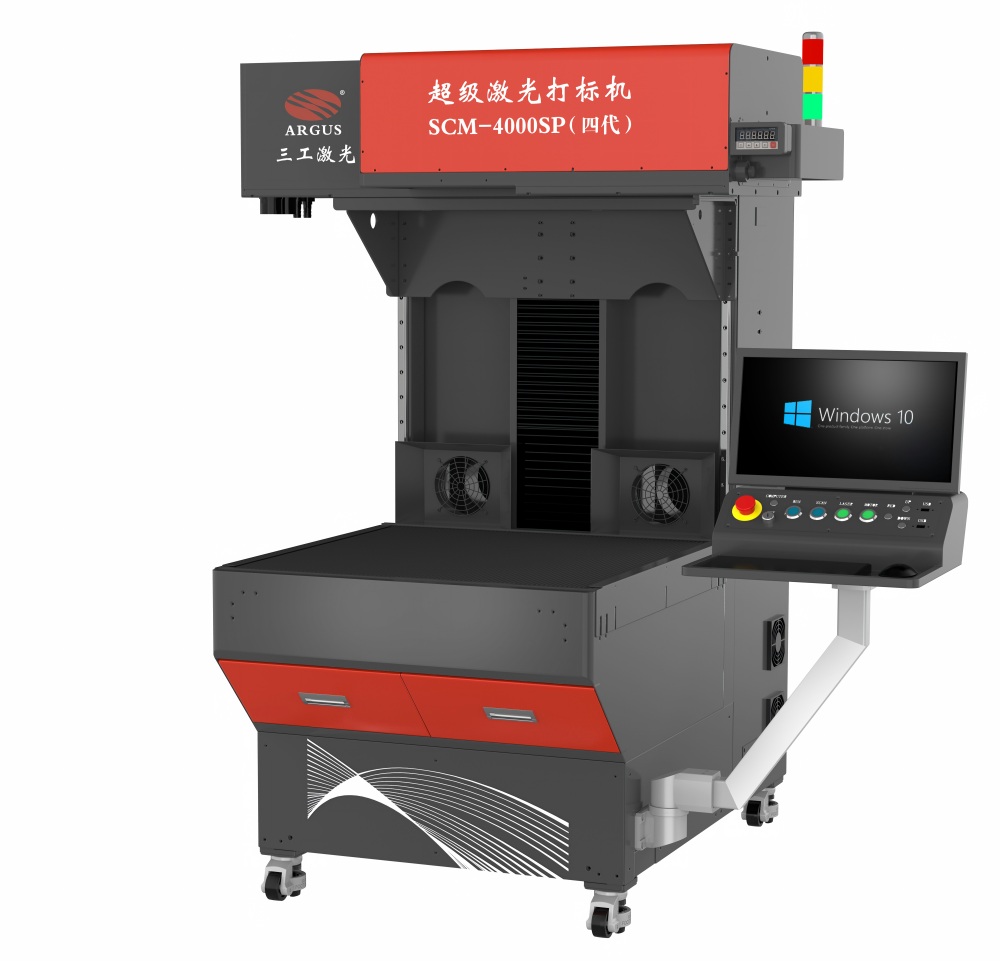
SUNIC offers standard CO₂ galvo laser machines and automatic sheet-fed laser systems for paper processing. The appropriate solution depends on the product design, material specifications and handling requirements.
The SUNIC standard CO₂ galvo laser machine provides a flexible platform for evaluating greeting cards, invitations, decorative packaging components and paper crafts.
When selecting a configuration, consider the processing area, paper characteristics, design complexity and required output. Where cutting must align with printed artwork, optional CCD vision positioning can be discussed and evaluated through testing.
Explore the SUNIC Standard CO₂ Galvo Laser Machine.
https://www.suniclasertech.com/galvo/1.html
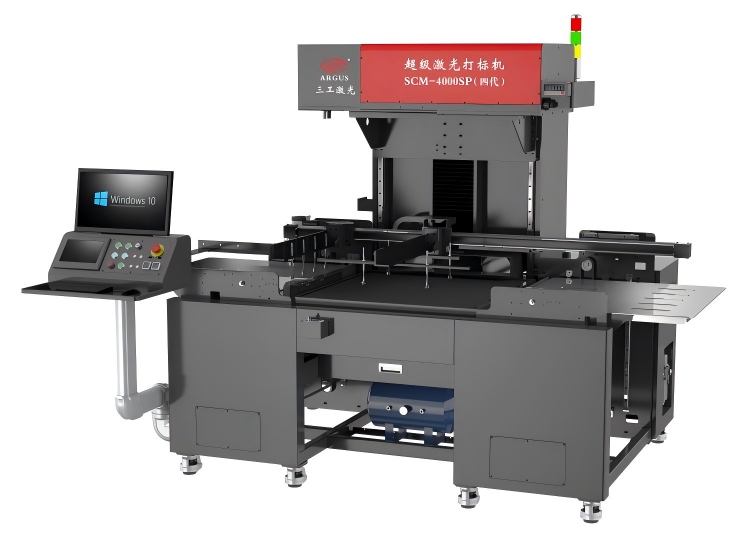
For manufacturers seeking to reduce repetitive sheet handling, SUNIC’s automatic sheet-fed laser cutting machine combines laser processing with automatic sheet loading and unloading.
This solution can be evaluated for recurring paper processing tasks where consistent material transfer is an important part of the workflow. Paper separation, positioning, cutting and finished-sheet removal should be assessed together.
Automatic handling does not determine cutting speed by itself. Actual output depends on the artwork, material, loading and unloading cycle, and the condition of the processed sheets.
Explore the SUNIC Automatic Sheet-Fed Laser Cutting Machine.
https://www.suniclasertech.com/automation/26.html
Compare both solutions using the same production paper and representative artwork. Record the complete cycle time, operator involvement, feeding consistency and finished-product quality.
This comparison provides a practical basis for selecting the level of automation your production requires.
To make the test useful, provide:
The actual production paper, including any coating or lamination.
Available material specifications, such as thickness and grammage.
A vector design file and finished dimensions.
Printed samples if registration is required.
Expected order quantities or output targets.
Acceptance criteria for edge color, detail strength and appearance.
Information about subsequent folding, bonding or assembly.
Agree on what will be measured before testing. A useful evaluation should document the material, design, machine configuration, processing time and finished result.
Suitability must be checked for the specific material. Paper composition, coatings, adhesives and laminates can affect processing and may require additional assessment before testing.
It can be evaluated for intricate decorative patterns, but the minimum practical detail depends on the material and design. Thin connections must remain strong enough for waste removal and handling.
Potentially, provided the working area, material compatibility and handling configuration meet the requirements of both products. Each application should be tested separately.
No. Output depends on the artwork, material, order quantity and complete workflow. Compare actual production trials rather than relying on maximum machine speed.
Automatic handling is worth evaluating when repeated sheet loading and removal require substantial operator time. The decision should consider order frequency, paper consistency, design fragility and the complete production cycle. A trial using actual materials can help determine whether automation provides a practical benefit.
Whether you produce greeting cards, invitations, decorative packaging or paper crafts, a material test is a practical starting point for equipment selection.
Send SUNIC your paper samples, design files and production requirements. Our team can evaluate the cutting result and help identify a suitable machine configuration for your application.
https://www.suniclasertech.com/contact.html
